


All Products
-
LCD TFT Display
-
Touch Screen TFT Display
-
Round TFT Display
-
TFT Color Display
-
AMOLED Display Module
-
Micro OLED Display
-
Bar Type TFT
-
Square TFT Display
-
High Brightness LCD Display
-
COB LCD Display
-
Sunlight Readable TFT
-
UART TFT Display
-
LCD Display Module
-
PMOLED Display
-
Epaper Display
-
LED Digital Display
-
Capacitive Touch Panel
-
 inkotechYes, we started using round displays also, now we are checking and testing them with our product. Some work needs to be done with programming, etc, but this is the work of our engineers. If there are nay questions, I will let you know. The quality of the display is excellent and looks really first-class! We are happy we found you as manufacture
 -
Elevate outdoor collectiveHi Angel, That’s great news. Many thanks again for your excellent, professional work. Koby.
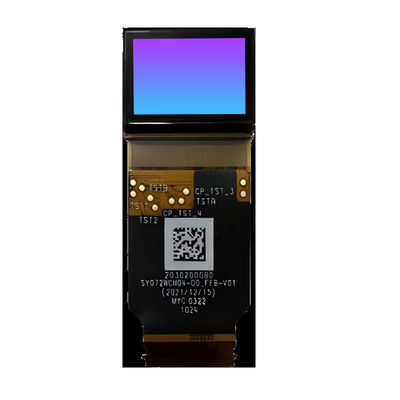
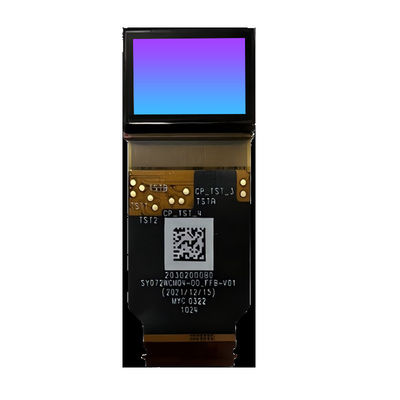
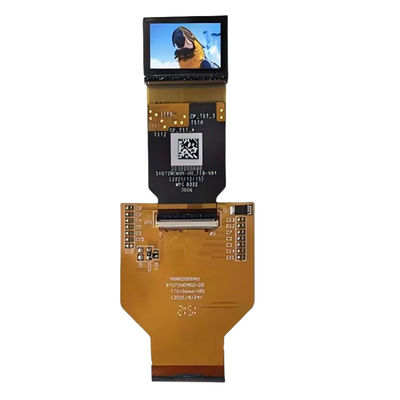
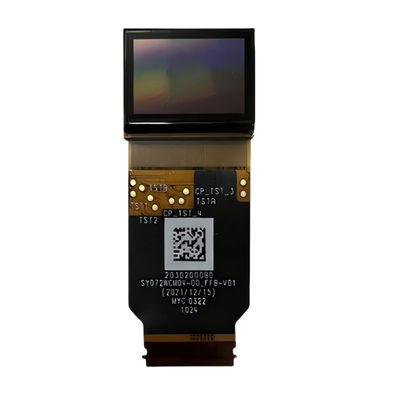
0.72 Inch Micro OLED Display Module with 2000 C/D Brightness and 500,000:1 Contrast Ratio for Optimal Viewing


| Place of Origin | China |
|---|---|
| Brand Name | HuaXin |
| Certification | ISO14001/ ISO9001/IATF16949 |
| Model Number | ESHX072WCM06 |
| Document | ESHX072WCM06-SPEC.pdf |
| Minimum Order Quantity | 500 |
| Price | $98 |
| Packaging Details | blister+foam box+bubble bag+inside carton+master carton |
| Delivery Time | 6weeks~8weeks |
| Payment Terms | T/T |
| Supply Ability | 50K per month |
Product Details
| Display Technology | MICRO OLED Display | Name | Oled Module |
|---|---|---|---|
| Size | 0.72" | Resolution | 1920x1200 |
| Brightness | 2000cd/m2 | Interface | 61pins MIPI |
| Color Mode | RGB/MONO-G | ||
| Highlight | 0.72 Inch micro oled display module,1920x1200 micro oled display module,61 pins micro oled display module |
||
Product Description
0.72 Inch Micro OLED Display Module
High-resolution 1920x1200 display with 61-pin MIPI interface and 2000 cd/m² brightness for optimal visual performance.
Product Specifications
| Parameter | Value |
|---|---|
| Part No. | ESHX072WCM06 |
| Display Mode | 0.72" micro OLED |
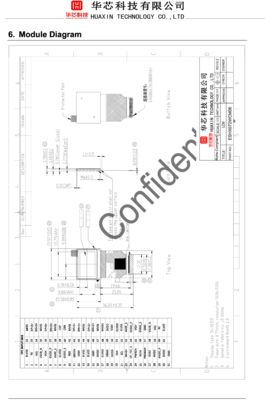
| Outline Size (mm) | 19.97×15.5×1.78 |
| AA Size (mm) | 15.552 × 9.72 |
| Display Resolution | 1920×1200 |
| View Angle | All |
| Brightness | 2000 cd/m² |
| Interface | 61-pin MIPI |
| Contrast Ratio | 500,000:1 |
Product Images

Technical Drawing
OLED Technology Overview
Advantages
- Lighter and thinner than LCD displays
- High contrast ratio and color saturation
- Lower power consumption
Disadvantages
- Higher cost compared to LCD and TFT
- Shorter operational lifetime than LCD and TFT
Manufacturer Information
Huaxin Technology (Enshi) Co., LTD
Founded in 2009 | Located in Hubei, Enshi | Registered capital: 20 million
Company Advantages
- Cost-effective inland manufacturing base
- Advanced equipment for stable quality
- Highly automated production processes
- 20+ years of LCD industry experience
- Custom product design capabilities
Certifications
- ISO14001
- ISO9001/IATF16949
- SGS certified LCD modules
Production Capabilities
- Current staff: 500+ (10% R&D, 15% QC)
- Product range: LCD, LCM, TFT, backlight, OLED
- LCD types: VA, TN, HTN, STN, FSTN, CSTN
- LCM types: COB, TBA, COG, TP, LED backlight
Production Capacity
| Product Type | 2021 | 2022 | 2023 | 2024 | 2025 | Unit |
|---|---|---|---|---|---|---|
| LCD Production | 4.5 | 9 | 9 | 9 | 9 | Thousands/Day |
| LCM Production | 70 | 150 | 300 | 450 | 450 | Thousands/Day |
| Backlight Production | 100 | 200 | 300 | 500 | 500 | Thousands/Day |
| OLED Production | 10 | 20 | 30 | 40 | 50 | Thousands/Day |
Product Applications
- Safety boxes & instruments
- Locks & smart home devices
- Transmitters & watches
- Radios & audio equipment
- Collimators & navigators
AMOLED Display Characteristics
- Self-emissive pixels
- Exceptional contrast ratio
- Superior color accuracy and vibrancy
- Wide viewing angles
- Enhanced power efficiency
- Ultra-thin and flexible design
- Fast response time
AMOLED Power Efficiency Comparison
Power Consumption
- AMOLED consumes power per-pixel basis (dark pixels use minimal power)
- LCD/LED require constant backlight regardless of content
Content Dependency
- AMOLED more efficient for dark content (pixels can turn off)
- LCD/LED power consumption remains constant
Brightness Control
- AMOLED adjusts pixel brightness individually
- LCD/LED typically have fixed backlight brightness
Display Size Impact
- AMOLED more efficient for smaller displays
- Larger LCD/LED may require more power-hungry backlights
Recommended Products