


All Products
-
LCD TFT Display
-
Touch Screen TFT Display
-
Round TFT Display
-
TFT Color Display
-
AMOLED Display Module
-
Micro OLED Display
-
Bar Type TFT
-
Square TFT Display
-
High Brightness LCD Display
-
COB LCD Display
-
Sunlight Readable TFT
-
UART TFT Display
-
LCD Display Module
-
PMOLED Display
-
Epaper Display
-
LED Digital Display
-
Capacitive Touch Panel
-
 inkotechYes, we started using round displays also, now we are checking and testing them with our product. Some work needs to be done with programming, etc, but this is the work of our engineers. If there are nay questions, I will let you know. The quality of the display is excellent and looks really first-class! We are happy we found you as manufacture
 -
Elevate outdoor collectiveHi Angel, That’s great news. Many thanks again for your excellent, professional work. Koby.
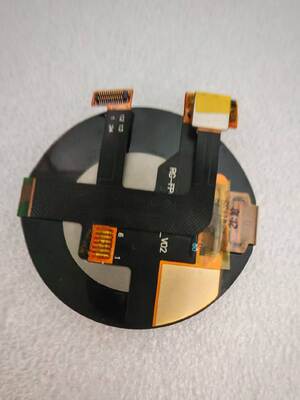
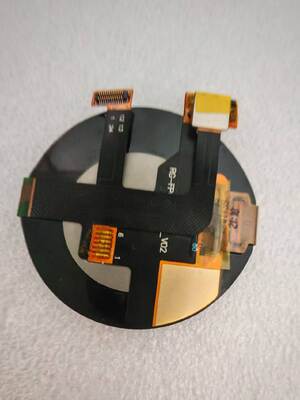
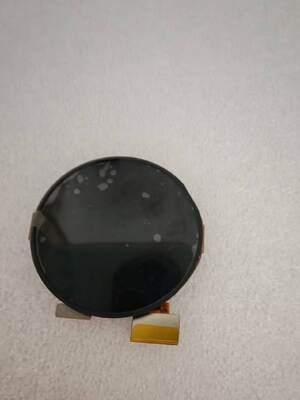
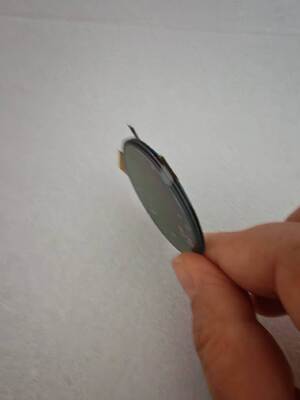
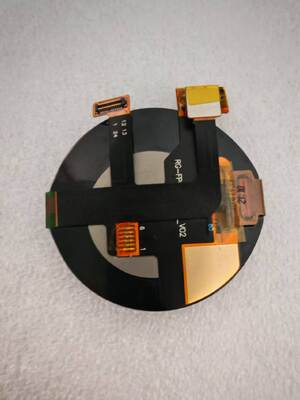
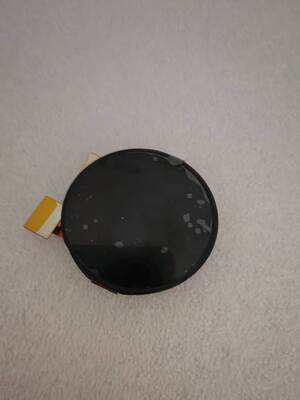
1.5 Inch Round AMOLED Display Module with 466*466 Dots and 800c/d Brightness


| Place of Origin | China |
|---|---|
| Brand Name | HuaXin |
| Certification | ISO14001/ ISO9001/IATF16949 |
| Model Number | HX150ON1499 |
| Document | HX150ON1499 drawing Model (...1).pdf |
| Minimum Order Quantity | 500 |
| Price | $7.8 |
| Packaging Details | blister+foam box+bubble bag+inside carton+master carton |
| Delivery Time | 6weeks~8weeks |
| Payment Terms | T/T |
| Supply Ability | 50K per month |
Product Details
| Display Technology | Round Amoled | Name | Amoled Panel |
|---|---|---|---|
| Size | 1.5" | Resolution | 466*466 |
| Brightness | 800c/d | Interface | MIPI |
| CTP Ic | CST9217 | ||
| Highlight | 1.5 Inch AMOLED Display Module,466*466 Dots AMOLED Panel,800c/d Brightness Round AMOLED Display |
||
Product Description
1.5 Inch Round AMOLED Display Module with Oncell Touch - 466×466 Dots and 800c/d Brightness
Key Specifications
| Part No. | HX150ON1499 |
|---|---|
| Display Size | 1.5 inch round AMOLED display |
| Outline Size (mm) | 40.70×40.94×0.77 |
| AA Size (mm) | 38.31×38.31 |
| Resolution | 466×466 |
| Interface | MIPI |
| Brightness | 800 c/d |
| View Angle | All |
| Driving IC | CO5300 |
| CTP driving IC | CST9217 |
Technical Drawing

OLED Product Knowledge
OLED Advantages
- Lighter and thinner than LCDs
- High contrast ratio
- High color saturation
- Lower power consumption
OLED Disadvantages
- AMOLED is more expensive than LCD and TFT
- Lifetime is shorter than LCD and TFT
Company Information
Huaxin Advantage
- Factory base located at inland city which has cost effective
- Most advanced new equipment which can keep quality stable
- Most processes using fully automatic equipment which has efficiency and stable quality
- Professional engineers and production leaders with 20+ years experience in LCD field
- Self design for customized product
Our Certificates
- ISO14001
- ISO9001/IATF16949
- SGS of LCD module
Huaxin Technology (Enshi) Co., LTD
Hubei.Enshi
Date of foundation: 2009
High technology enterprise specializing in research, development, production and sales of LCD, LCM, TFT, backlight, OLED
Register capital: twenty million
Current staff: 500+
R&D accounts for 10%
QC accounts for 15%
Production Capacity
| Annual Production Capacity | 2021 (Current) | 2022 (Goal) | 2023 (Challenge) | 2024 (Challenge) | 2025 (Challenge) | Remark |
|---|---|---|---|---|---|---|
| LCD Production Capacity | 4.5 | 9 | 9 | 9 | 9 | Unit: thousands of logarithms/Day |
| LCM Production Capacity | 70 | 150 | 300 | 450 | 450 | Unit: Thousand piece/Day |
| Backlight Production Capacity | 100 | 200 | 300 | 500 | 500 | Unit: Thousand piece/Day |
| OLED Production Capacity | 10 | 20 | 30 | 40 | 50 | Unit: Thousand piece/Day |
Product Application
- Safety box & instrument
- Lock & smart home
- Transmitter & watch
- Watch & radio
- Collimator & navigator
AMOLED Display Characteristics
- Self-Emissive Pixels
- High Contrast Ratio
- Color Accuracy and Vibrancy
- Wide Viewing Angles
- Power Efficiency
- Thinness and Flexibility
- Fast Response Time
Power Efficiency Comparison
- Power Consumption: AMOLED displays consume power on a per-pixel basis, meaning that pixels displaying black or dark content consume very little power, while pixels displaying bright or white content consume more power. LCD and LED displays require a constant backlight that consumes power regardless of the displayed content.
- Content Dependency: AMOLED displays are more power-efficient for content with dark or black areas, as individual pixels can be turned off to save power. LCD and LED displays consume a relatively constant amount of power as the backlight remains active.
- Brightness Control: AMOLED displays can dynamically adjust pixel brightness for better efficiency in low-brightness scenarios. LCD and LED displays typically have fixed backlight brightness, resulting in higher power consumption.
- Display Size: AMOLED displays tend to be more power-efficient for smaller sizes as consumption scales with pixel count. Larger LCD/LED displays may require more power-hungry backlights, reducing efficiency compared to same-size AMOLED displays.
Recommended Products
-
VIDEO